The Dark Reality: Sex Workers
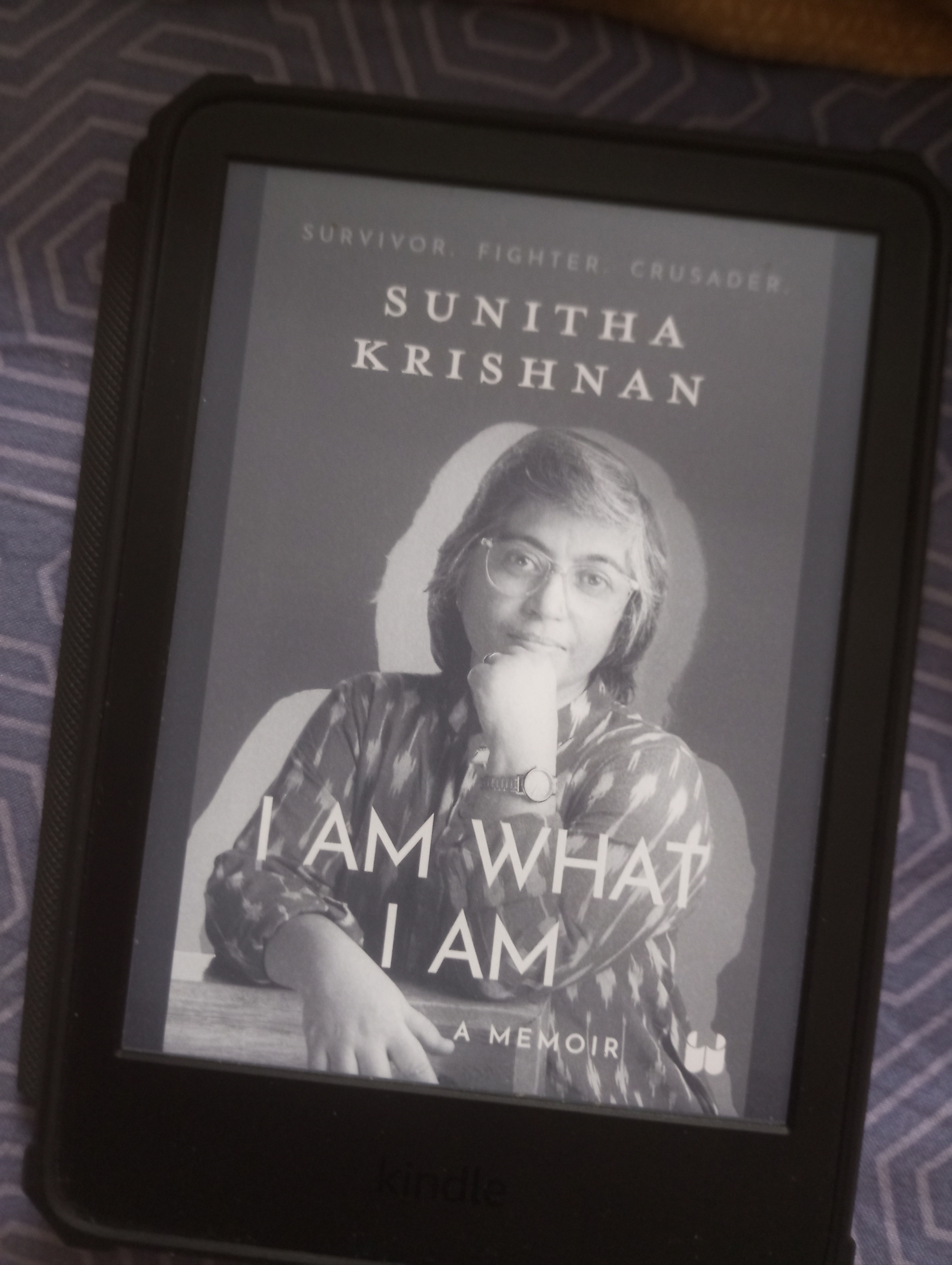
After reading "I Am What I Am: A Memoir" by Sunitha Krishnan garu, I realized how limited my understanding was regarding sex workers. I always used to wonder, so many developed countries have legalized organised prostitution, right? So why doesn’t India think along the same lines? At least HIV would be controlled. However, after reading this book, I realized how small that line of thinking was and what level of idiotic idea it is in the Indian context. I didn’t just gain a new perspective, I found answers to many questions I’ve been carrying around. Let me walk you through some of them.
1. Victim vs Survivor:
One thing that hit me hard was this idea of what society thinks a "victim" should look like. Sunitha garu talked about how people expect victims to behave in a certain way, hide their faces, be broken, and be full of shame. Only then do people feel sympathy. But if someone shows strength, if they carry themselves with dignity, suddenly the sympathy disappears. Why is that? Why do we only feel sorry for those who are visibly broken? This really opened my eyes to how much we judge based on appearances and expectations. We may not do this intentionally, but yeah, isn't it true?!!!
2. Prostitution and Legalization:
As said, for the longest time, I used to think, "Why not legalize prostitution in India like many other countries? At least we could control HIV or other issues, right?" But this book made me understand how naive that thinking was. Sunitha garu explained how legalizing it would only normalize exploitation when it comes to India. It’s not just about sex work being legal or illegal... It’s about coercion, about trafficking, and about children being forced into this world where they have no power. Legalizing it wouldn’t solve these deeper issues, and I see that now.
3. The Reality of Exploitation:
One of the MOST chilling moments was when Sunitha garu visited a legal brothel in a country outside India, where clients could purchase any kind of violent "service"... Whips, burns, and things far worse. I felt a deep sense of sickness, wondering, "If this were legal in India, would our women and children be subjected to the same kind of brutality? (Do you know? They are already facing it, but illegally, with rusted blades, and a complete absence of humanity, she mentioned)." (Well, we may not explicitly permit this if we legalize prostitution, but how could we control it in a world already so steeped in such evils?) I once thought that legalizing prostitution would empower women (at least those who are willing to do such work, though in this trade, "willing" is a complex and often misleading term), giving them more control over their bodies. But the reality is far more sinister. Legalization wouldn’t just normalize the trade; it would open the floodgates to more trafficking, coercion, and exploitation. The worst part is that private players could use this supposed legitimacy to justify their so-called business, asking, "Why not private players?" when the government itself is maintaining it, isn't it?
4. Impure:
Like many people, like Periyar and Ambedkar Garu, she also talked about "the so-called purity." but in a different context. I mean, how do we, as a society, judge women who have been raped or trafficked. It’s like, no matter what, their worth is reduced to the state of their bodies. Even if they were victims, even if they were forced, we look at them as "impure." This is a huge issue in our society, especially Indian society, Let's agree with this, how many centuries do we go blind?! We don’t offer them acceptance, we offer them shame. The trauma they face is compounded by the stigma we place on them... as if the world is going to end.
5. What We Can Do:
This book also gave me a lot to think about in terms of solutions. Sunitha garu mentioned how, if govt + community-based organizations could get involved in the rescue and rehabilitation of minors, trafficking could be reduced by half (If governments can support). It seems like such a good feasible step... If the government can tackle issues like HIV with full force and with big budget, why can’t they do the same for sexual exploitation (which is the root cause of HIV)? It’s not just about rescuing victims, it’s about prevention, it’s about changing how society views these women, and it’s about offering real support.
6. A Deeper Understanding:
This book has changed the way I look at so many things in this area of study. It’s not just about laws or systems... It’s about humanity, dignity, and the way we treat the most vulnerable in our society. Well, I can’t say that I have all the answers now just after I completed this eye-opener book, but I can confidently say that I have some good understanding, and I’m asking and going to ask the right questions, at least to myself, on this topic.
It’s clear to me that we need more than just legal solutions, in the current scenario. I mean, we need empathy, understanding, and action on the ground.
Sunitha garu’s life and mission have truly shown me that change is possible, and of course, she challenged my beliefs and threw them out of the world in one kick (I Am What I Am: A Memoir)
Wait, but how is change possible?
Well, it demands that we all step up, challenge our own biases, and fight for those whose voices have been silenced for far too long. Not JUST THE GOVERNMENT OR BODIES LIKE PRAJWALA (Founded by Sunitha garu).
I literally cried many times while reading this book, especially when she talks about children... Just 3, 7 years old and all... and being trapped in this horrifying prison by their own fathers, mothers, families, and society itself. It's heartbreaking and enraging all at once.
By the way, I always cross-check information whenever possible and whenever I feel the need. I rarely trust anything blindly, even if it's from someone I deeply admire, like Chandra Shekhar Azad garu. What matters most to me is not the person... especially when cross-verifying proves MOST of their claims wrong... but the cause they are fighting for. If I believe the cause is just, that's all that matters. I give it my full support. And obviously, I continue to respect the footsteps of these people.
I still have many points to mention, but I am out of words… maybe because of a lack of sleep?! I will gather my thoughts and continue later.
Salute to you, Sunitha Krishnan garu. Keep inspiring generations like you already do. Your strength is a beacon for people like me.
Last but not least, In most of Indian society, when the word “sex” is mentioned, it often induces a sense of fear, as if it is something taboo or shameful. This reaction is incongruous (as if it is not the reason behind the drastic 40 crore to 146 crore population in just 70 years). Instead of shying away from the topic, it is crucial for the so-called educated individuals to engage with and normalize discussions about sex. Only by doing so can we begin to address the associated issues and work towards a more informed and compassionate approach to sexual health and the realities of sex work.
Live. Long. India.